
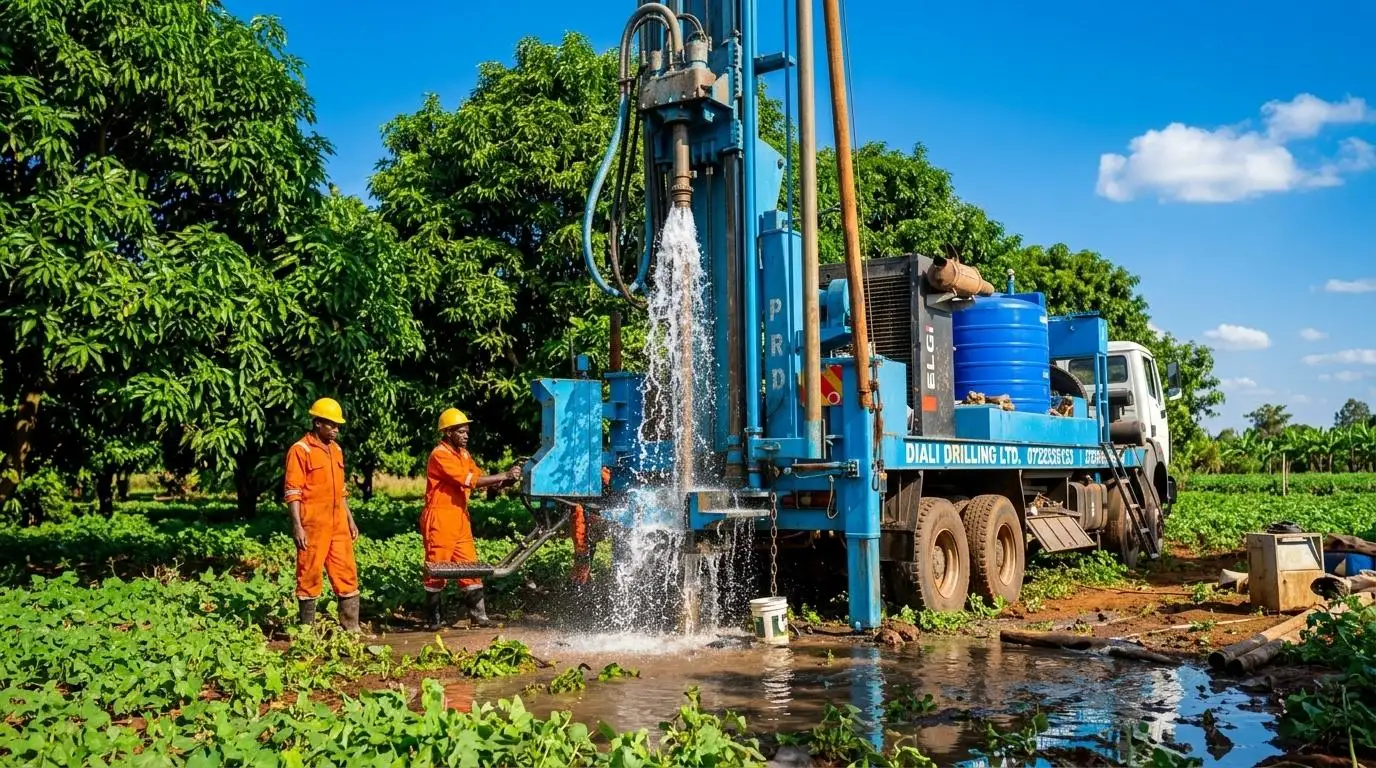
Reliable water access is important for residential properties, agricultural activities, commercial facilities, and community development. Where conventional water supplies are limited or unreliable, a borehole may offer a potential alternative.
However, borehole development requires more than identifying a location and arranging drilling. Proper technical assessments, regulatory compliance, financial planning, and long-term maintenance are essential to achieving a practical and sustainable outcome.
1. Start with a hydrogeological assessment
Before drilling, a qualified hydrogeologist should assess the site’s geological conditions and groundwater potential.
The assessment may consider existing borehole records, geological formations, groundwater availability, and other relevant site information. Geophysical surveys may also help identify suitable drilling locations.
Although these assessments improve decision-making, they cannot guarantee that a borehole will produce a particular volume of water.
2. Understand the regulatory requirements
Borehole development must comply with the applicable water-resource, environmental, land-use, and drilling requirements.
In Kenya, prospective developers should confirm the relevant approvals and requirements with the Water Resources Authority (WRA) and other responsible authorities before proceeding.
Working with appropriately qualified professionals helps ensure that the project follows the required procedures.
3. Prepare a realistic project budget
The cost of developing a borehole extends beyond drilling. A comprehensive budget may include:
-
Hydrogeological assessments and technical reports.
-
Permits and required professional services.
-
Drilling, casing, and borehole completion.
-
Pump installation and water storage.
-
Water quality testing and any necessary treatment.
-
Electricity or solar power systems.
-
Distribution infrastructure and ongoing maintenance.
Costs vary according to site conditions, borehole depth, equipment requirements, and the intended use of the water.
4. Plan for water quality and long-term operation
A borehole’s water yield alone does not determine whether the project will meet its intended purpose. Water quality testing is necessary to establish suitability for drinking, irrigation, industrial processes, or other uses.
Developers should also plan for pump servicing, routine water testing, energy costs, and responsible groundwater use.
Where required, treatment systems should be selected based on professional assessment and laboratory results.
5. Explore suitable financing options
For some property owners, businesses, institutions, and community projects, the upfront cost of borehole development may be a significant barrier.
Depending on eligibility and project viability, financing arrangements or partnerships may help spread or mobilise the required resources. Any proposed funding structure should clearly explain its costs, obligations, conditions, and risks.
A feasibility assessment can help stakeholders understand the likely costs, technical requirements, and potential benefits before committing funds.
Building sustainable water infrastructure
A well-planned borehole project starts with reliable technical information and continues through responsible construction, water quality management, and ongoing maintenance.
Crown-Edge International Group Limited supports borehole and water infrastructure initiatives through project planning, coordination of technical assessments, and financing solutions for qualifying projects.
Planning a borehole project for your property, business, or community? Contact Crown-Edge to discuss the assessments, planning requirements, and potential financing options relevant to your project.


Customer Reviews
Thanks for explaining the difference between the three ! I was not sure and am wary of ‘greenwashing’ , as you point out. Good to know the choices be reminded that it is important to check out the details.
Nemo enim ipsam voluptatem quia voluptas sit aspernatur aut odit aut fugitI agree that the term ‘regenerative’ needs to be much more clearly defined. A friend spoke to a farmer who purported to farm regeneratively and was enthusiastic about the use of glyphosate for keeping weeds down for in his no-plough system . What a gift to Bayer who
Thanks for your article. In my opinion the most overlooked element of organic cereal production is the biodiversity and abundance it delivers. For every acre or arable cropping there will be almost an acre of a legume-rich ley that us there to build fertility for the subsequent arable crops.